Stretch Ceilings vs Plasterboard: The Architectural Comparison
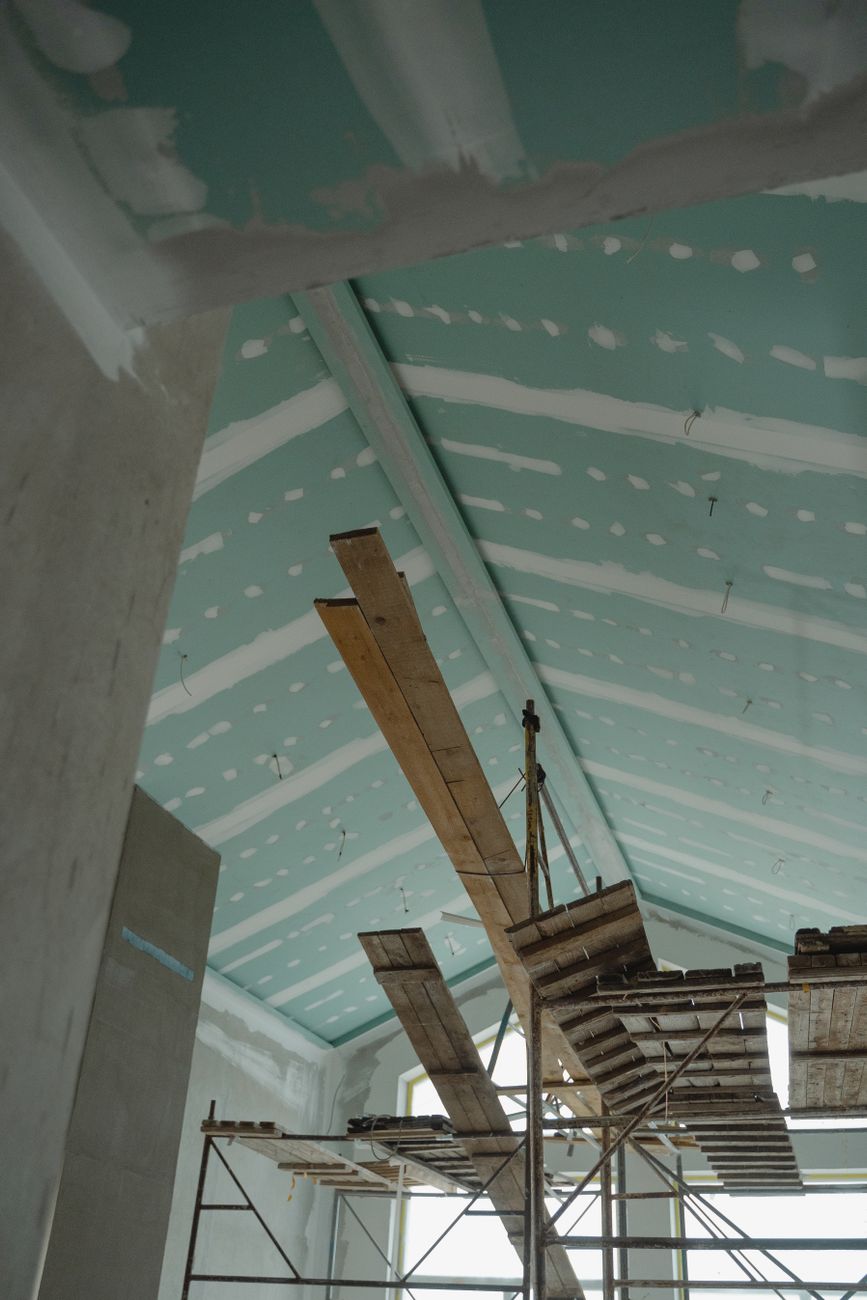
For decades, gypsum plasterboard (commonly known across Australia under brand names like Gyprock) has served as the default interior ceiling substrate. However, as contemporary homes demand larger clear spans, integrated indirect lighting, and faster build schedules, architects are increasingly specifying stretch ceilings as a superior alternative.
1. Structural Movement & Crack Resistance
Australian residential construction relies heavily on lightweight timber and steel framing. As framing lumber dries and timber frames expand and contract through seasonal humidity swings, movement transfers into rigid plasterboard joins. Hairline cracking along sheet boundaries is a familiar frustration for homeowners.
In contrast, a stretch ceiling is anchored exclusively to the perimeter walls using specialised aluminium or composite tracks. The membrane floats completely independently of roof trusses and floor joists overhead, meaning foundation settling or thermal deflection can never produce surface cracks.
2. Installation Speed and Site Disruption
| Criterion | Standard Plasterboard | BrilliantCanvas Stretch Ceiling |
|---|---|---|
| Installation Time | 5-8 Days (Fixing, 3x coats, drying, sanding, painting) | 1-2 Days (Single visit) |
| Dust & Debris | High (Sanding dust penetrates carpets and HVAC) | Zero dust (No sanding required) |
| Furniture Handling | Full room evacuation and floor covering required | Furniture can remain in the centre of room |
| Water Damage | Saturates, sags, collapses, promotes black mould | Water-retaining; holds up to 100L/m² without rupturing |
| Repainting | Required every 5-7 years | Never requires painting |
3. Overhead Water Leak Management
In the event of a burst plumbing pipe or broken roof tile, a plasterboard ceiling absorbs moisture, quickly turns to mush, and crashes down onto expensive hardwood floors and furnishings. A polymer stretch membrane, by contrast, acts as an elastic containment basin. Our technicians can drain the trapped water through a light fixture hole, dry the sub-cavity, and reheat the membrane to snap it back to its original tension.
Considering a Renovation or New Build?
Discover why custom stretch membranes are replacing drywall across Australian developments.